
trafo.
an empty tower,
a new meeting place
disused transformer towers stand in villages everywhere. a concept study on how, with minimal effort, they can become public places for small communities.
for many villages, the transformer tower was the first visible sign of electrification. most were built in the first half of the 20th century, often with surprising ambition: steep roofs, decorative windows, sometimes a relief in the gable. today many of these towers are being replaced by small compact substations. what remains are empty buildings, often right in the centre of the village, at crossroads or on the square.
at the same time, small communities in particular are losing their informal meeting places. the inn has closed, so has the shop, and the bench outside is gone. what remains is the walk from the car to the front door.
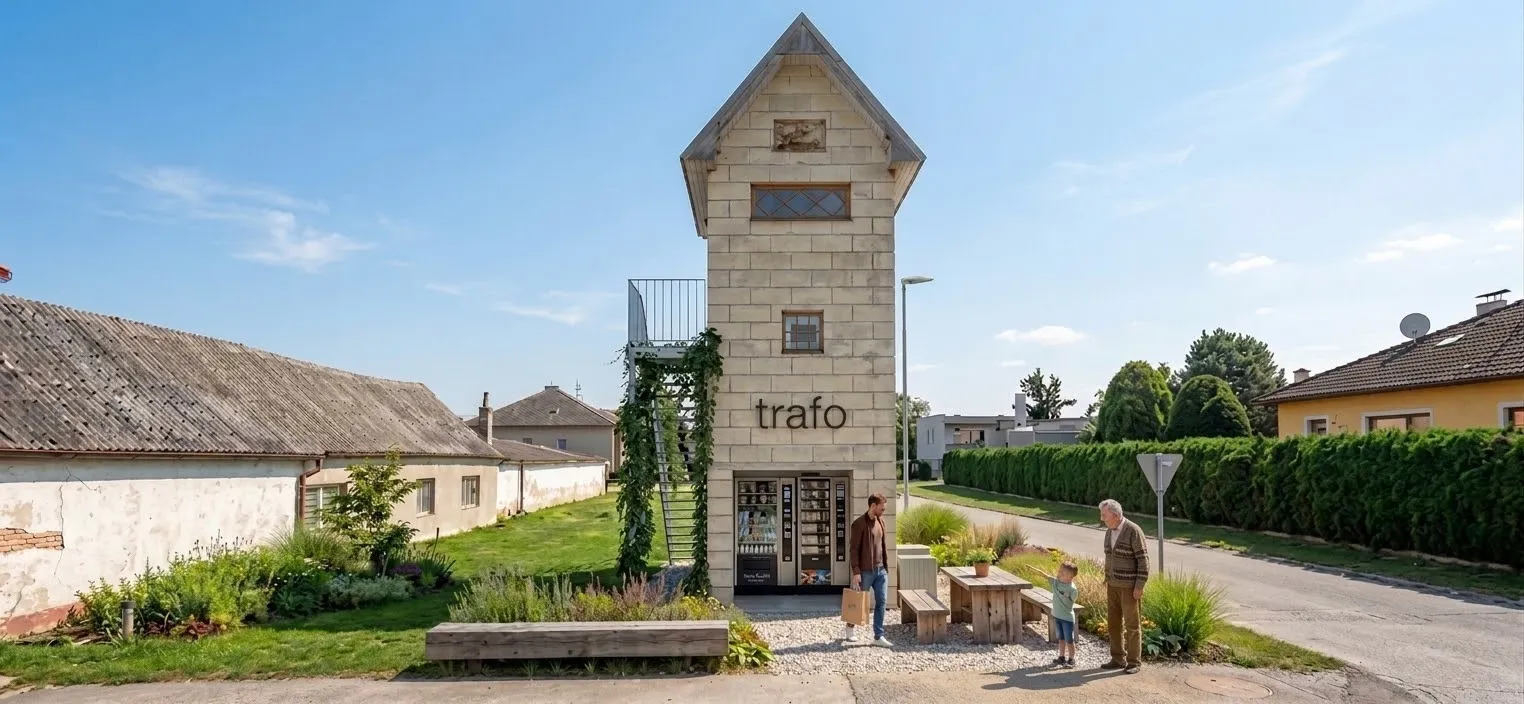
visualisation (ai-assisted): the trafo as a meeting place by day
context instead of conversion
trafo. starts right here, with deliberately minimal means. the tower stays as it is. instead of an elaborate conversion, its surroundings change:
- adapt the context. a paved area, benches, a table, planting. the leftover green around the tower becomes a place where people stop.
- place an attractor. something that brings people there regularly. in the study, these are vending machines with regional products in the opened ground floor, accessible around the clock. a parcel pick-up point, a swap shelf or an e-bike charging point would work just as well. after all, the power connection is already there.
- a meeting place emerges. whoever shops meets someone. whoever waits sits down. the rest happens by itself.
there are only two interventions on the tower itself: the opening on the ground floor and a slender outside stair with a platform. everything else is open space, furniture and lettering. reusing existing buildings is not only for factory halls and urban villas. it works at the smallest scale too.
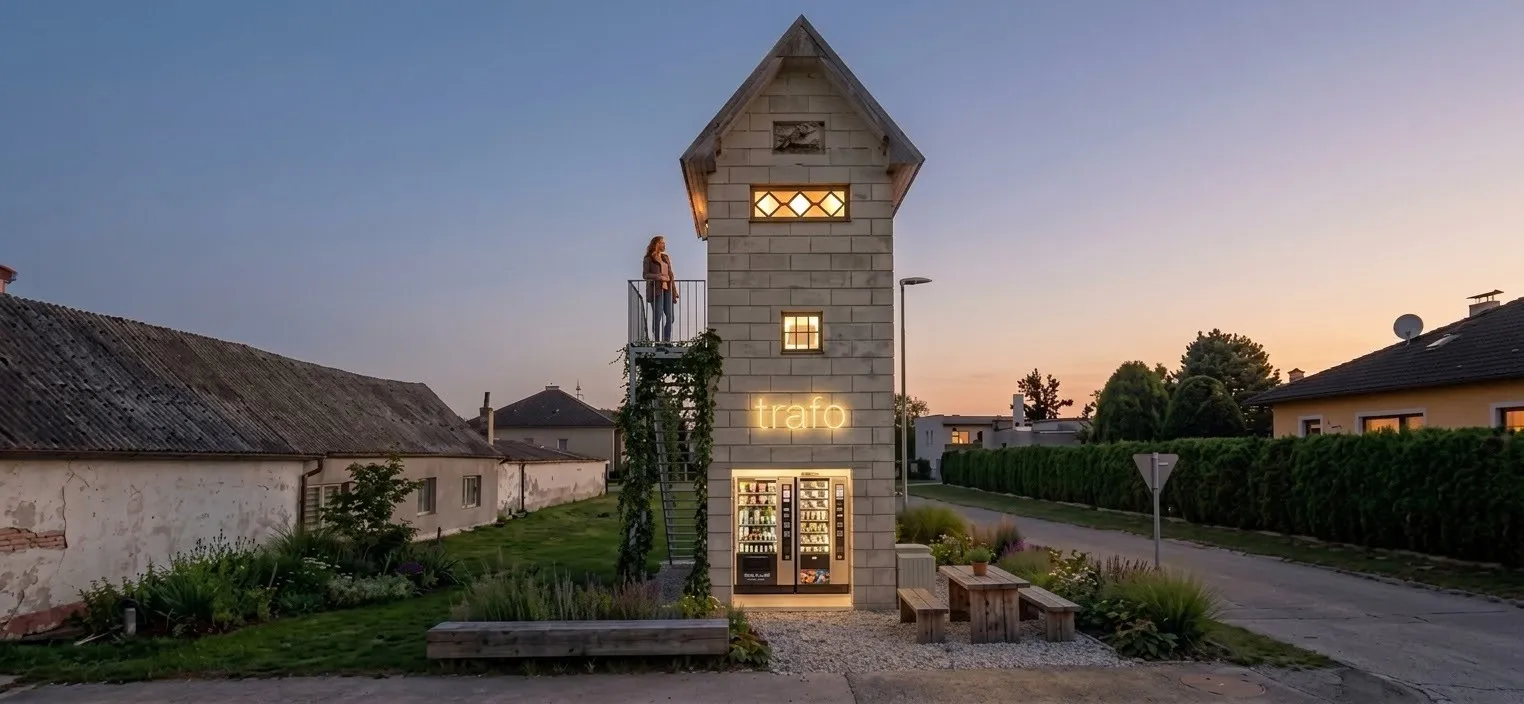
visualisation (ai-assisted): the same place in the evening
up
the stair stands in front of the facade and leaves the tower itself untouched. climbing plants grow up it, and at the top it ends on a small platform. from there you look out over the rooftops of the village.
before you start
- is the transformer out of service and released by the grid operator?
- who owns the tower and the plot?
- contamination: with old transformer equipment and materials such as asbestos, a survey is worthwhile.
- is the tower listed or subject to townscape protection?
- funding: programmes such as leader or village renewal schemes are obvious routes for municipalities and associations.
is there an empty tower in your village too?
your project, your question: tell us about it. we usually reply the same day.
let’s talk →